
The origins and founding of San Sebastián: from a coastal village to a historic city
When we walk through San Sebastián, we automatically think of the Belle Époque. Buildings such as the Victoria Eugenia Theatre, the Town Hall and the Hotel María Cristina transport us back to an era of casinos and recitals, when the European nobility spent their summers enjoying the sea breeze on La Concha beach. But what came before that? What are the origins and history of San Sebastián?
The origins of San Sebastián: several fishing settlements and a monastery
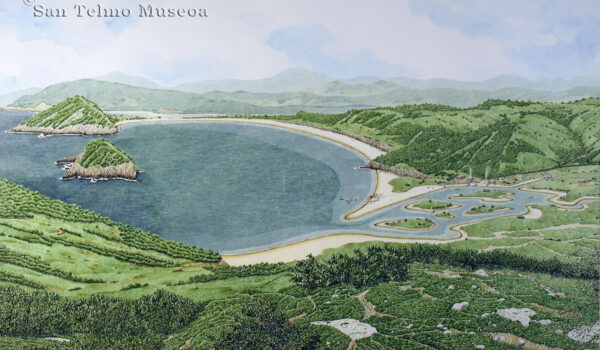
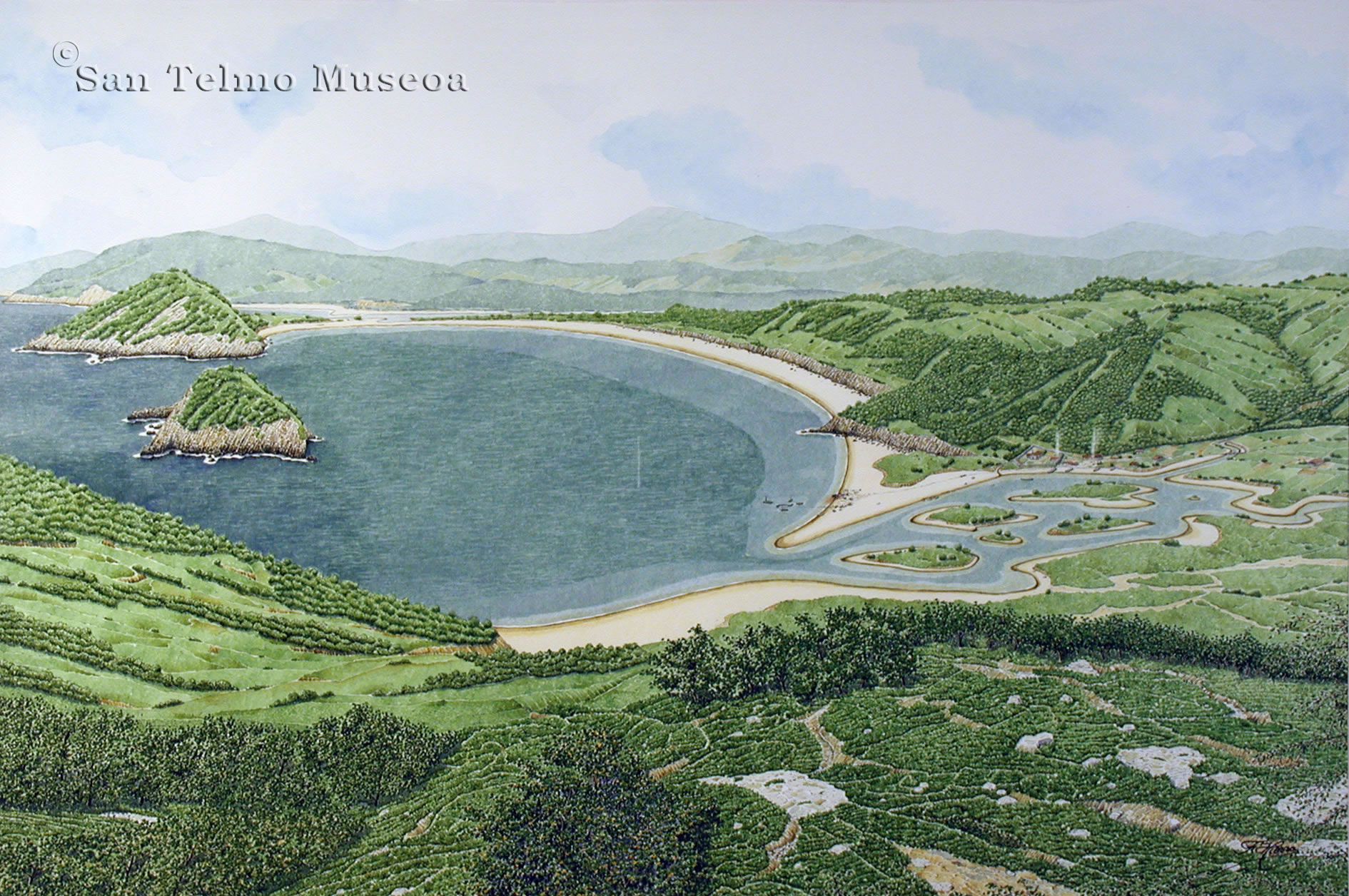
There are no documented references to San Sebastián until the 12th century. From that point onwards, the earliest written texts refer to a settlement of Gascon fishermen and traders on the slopes of Mount Urgull. They also mention the existence of the monastery of San Sebastián El Antiguo, situated where the Miramar Palace stands today, and several properties belonging to that monastery scattered along the banks of the River Urumea (*1).
Although few details are known on the matter, it is clear that at that time the monastery of San Sebastián El Antiguo was under the authority of the monastery of Leyre and was, therefore, the property of Navarre. The monastery was a spiritual centre located in what is now the Antiguo neighbourhood, but it also served as the main hub of social and administrative life for the local population.
How is it that, although the main centre of the population at that time was in the Antiguo district, the city’s history came to unfold in what we now know as the Old Town? Because at the foot of Mount Urgull, access to the sea – between the mountain and Santa Clara Island – was easier, and it was through this route that maritime trade with the outside world was established. And in its early days, Donostia’s greatest asset was its ability to forge links with other regions via the Cantabrian Sea.
Source: San Telmo Museum
San Sebastián was a coastal town with its own fleet, where Gascon was spoken
The earliest written accounts describing life in San Sebastián state that, even before the 12th century, there was already considerable maritime activity in La Concha Bay (the harbour quays at the foot of Mount Urgull had not yet been built). The city had its own fleet and received frequent visits from foreign merchants.
So much so that the first legal document governing the life of the society of San Sebastián (the Charter issued by Sancho VI the Wise, which is detailed below) contains detailed regulations governing maritime trade, and provides for trade relations with Bayonne, whose inhabitants spoke the same language: Gascon (an Occitan Romance language derived from Latin – Basque and Castilian became more widespread in the following decades).
Until then, Bayonne had served as the port of Navarre, but it proved to be unusable due to the sandbanks of the Landes. For this reason, the Charter provided for the promotion of Gascon emigration, so that Bayonne’s bourgeoisie of shipowners and merchants might move to the town of San Sebastián in accordance with that ‘repopulation drive linked to the desire to put down roots and defend the Kingdom of Navarre’, as set out in the Charter (*2).
The Founding of San Sebastián: a town in the Kingdom of Navarre in the 12th century
It was not until the 12th century that the first written records of San Sebastián’s origins as a town appeared. These historical references date back to the year 1180, when King Sancho VI the Wise of Navarre named it the ‘Villa de San Sebastián’. This is because, originally, San Sebastián was a Navarrese town, and it owes its name to the fact that the monastery situated where the Miramar Palace now stands was dedicated to Saint Sebastian.
At that time, in the 12th century, Spain was divided into several kingdoms: the Kingdom of Navarre, the Kingdom of Castile, the Kingdom of Aragon, the Kingdom of León, and the Kingdom of the Taifas (the independent states of the south, which had emerged in Al-Andalus). And it was the Kingdom of Navarre which, driven by the economic interest of having a port through which to export Navarrese wool by sea, legally established the town of San Sebastián.
To this end, Sancho VI the Wise issued a municipal charter that would govern the life of the community settled on the slopes of Mount Urgull from that point onwards. That charter encouraged the development of urban centres and led to a resurgence in settlement linked to a desire to put down roots, provided that Navarrese authority in the territory was upheld.
Although until then the monastery had been the focal point for the settlements in the area, following San Sebastián’s incorporation as a town of Navarre, the centre of the town, which was in the process of forming in the Antiguo district, shifted to the foot of Mount Urgull.
A key location due to its strategic position for maritime trade
San Sebastián’s status as a town belonging to the Kingdom of Navarre was short-lived. In the year 1200, as a result of the war between Alfonso VIII of Castile and Sancho VII ‘the Strong’ of Navarre, San Sebastián came under the rule of the Kingdom of Castile. The opportunity to trade with foreign countries from La Concha Bay gave Donostia a strategic and coveted location for landlocked monarchies.
From San Sebastián, goods manufactured in the interior of the kingdom could be shipped out by sea, and this made it a key location for the foreign trade of the various monarchies. Consequently, the Kingdom of Castile fought to secure its annexation, and by the early 13th century, Navarre’s seaport had become the coastal town of the Castilian court. As a result, the importance of the transport links with Vitoria and Burgos increased.
This is how San Sebastián gradually transformed from a small fishing village into a major port for one of the region’s wealthiest monarchies.
From a seaport to a military fortress
At first, being a Castilian port offered nothing but advantages for the inhabitants of San Sebastián: the Monarchy of Castile was wealthier than that of Navarre and, moreover, was in the midst of rapid expansion. Furthermore, although it became a Castilian town, successive monarchs respected its previous charters and granted the town a series of privileges designed to maintain exports from Navarre.
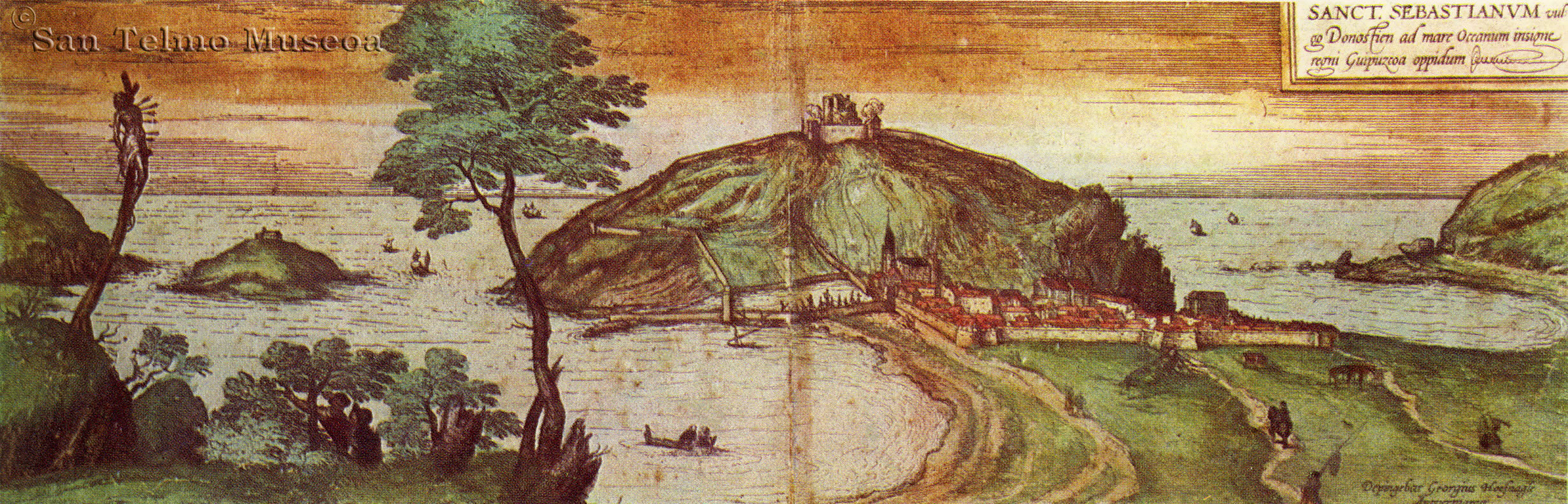
However, being part of the Crown of Castile also had its drawbacks. France and England sought alliances with the Castilian court, and reaching agreements was not always straightforward. Consequently, the economic prosperity resulting from the town’s status as a major port in the region was threatened by the constant wars against the French and the English. Consequently, the town of San Sebastián gradually transformed into a defensive fortress, and trade from its port shifted to the ports of Pasajes and Bilbao.
Source: San Telmo Museum
Noble and loyal San Sebastián: a steadfast military defence
Such was San Sebastián’s resilience in the face of foreign attacks that, during the reign of the Catholic Monarchs (the 15th and 11th centuries), when the Crowns of Castile and Aragon were united, San Sebastián was known as ‘the noble and loyal’. Of course, the constant state of siege led to a severe economic decline for the city.
In times of war, the people of San Sebastián invested in fortifications and in maintaining the garrison. At the same time, however, their maritime trade gradually declined until it shifted entirely to the port of Pasajes.
So whilst San Sebastián was focused on defending the Crown of Castile and Aragon against foreign invasions, the port of Pasajes served as one of the headquarters of the Royal Guipuzcoan Company of Caracas and the Royal Company of the Philippines, where goods arrived from the Spanish colonies in South America and the Philippines. This made Pasaia a particularly important bay in the 17th century.
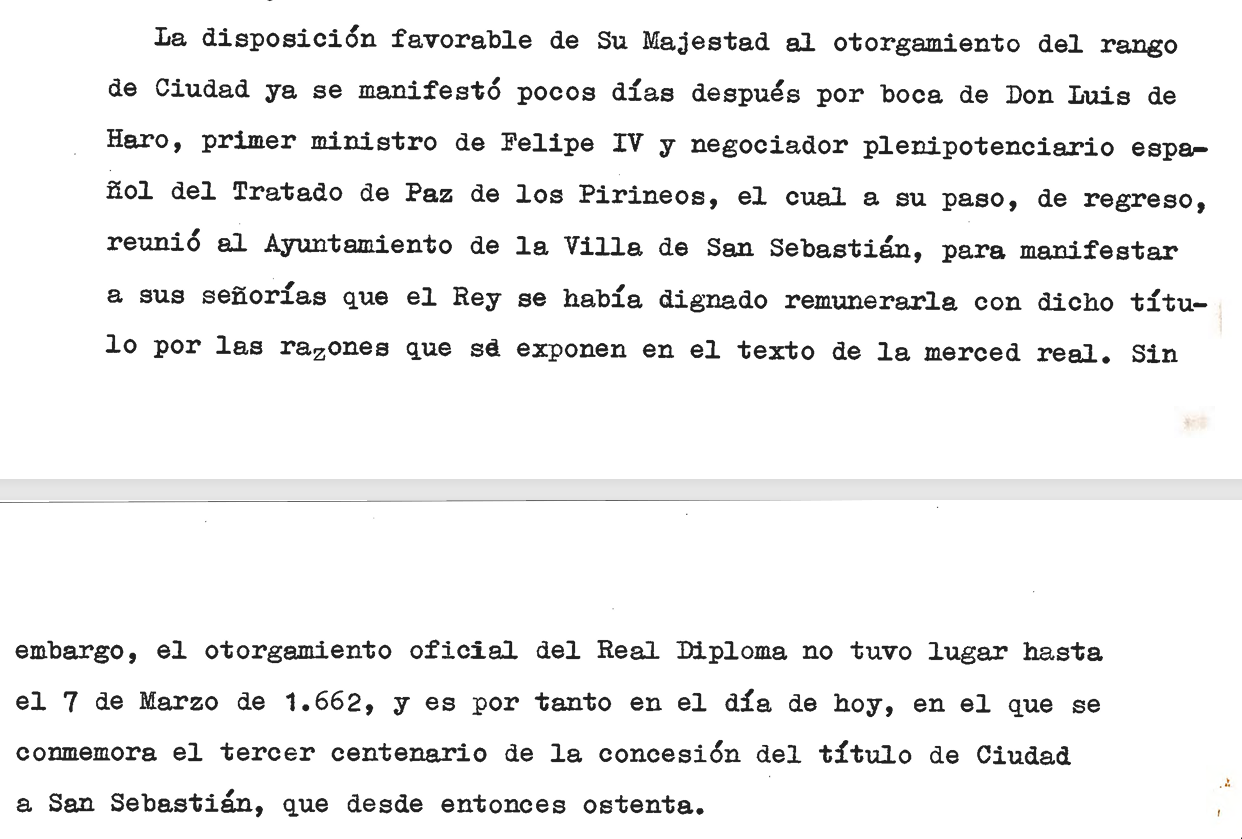
As things stood, San Sebastián spent two centuries fulfilling its military role. That is why, on 7 March 1662, King Philip IV granted it the title of ‘City’, and from that moment on it became the city of San Sebastián.
References
- Unsain, José María; Luengo, Félix; Hernández, Adriana; Aizpurua, Ramón (2016) San Sebastián. Un viaje a través de su historia: Editorial Nerea, en colaboración con Fundación Kutxa.
- Artola, Miguel (2000) Historia de Donostia- San Sebastián: Editorial Nerea, con la ayuda de la Dirección de General del Libro, Archivos y Bibliotecas del Ministerio de Educación, Cultura y Deporte

A journalist with over 20 years of experience in the media, specializing in creative storytelling and informative content. Through Go Local, she connects with the people, places, and events that matter in San Sebastián, reporting with journalistic rigor on the milestones that shape the city’s identity.