
Surf in Guipúzcoa: Guide to the best beaches and tips for beginners and experts
On the coast of Guipuzcoa, waves are a constant feature, and the love of surfing can be felt everywhere. Zarautz and Roca Puta have put Guipúzcoa on the world surfing map. But that’s not all. The waves at La Zurriola, Orio, Deba and Orrua also attract a lot of interest. There is great variety: sandy peaks and waves with rocky bottoms; maximum power in winter, playful fun in summer. The 86 kilometres of coastline at this latitude of the Cantabrian Sea are more than enough to satisfy both beginner and expert surfers.
San Sebastian and Zarautz: two towns with a surfing spirit, with waves suitable for all levels
If there are two towns in Guipuzcoa where surfing is in the air, they are Donostia and Zarautz. Shops selling boards and specialist clothing, surf schools, and surfers; lots of surfers in their wet wetsuits walking down the street or cycling fast with their boards under their arms to take a dip before going to work.
In San Sebastian, the idyll comes to life at La Zurriola. In Zarautz, the magic happens on the longest beach in Guipúzcoa: a two-and-a-half-kilometre stretch of sand, fully exposed to the power of the Atlantic. In both cases: sandy bottoms and changing peaks, offering surfing for different levels.
San Sebastian and La Zurriola: the ultimate representation of urban surfing
In San Sebastian, surfing takes place at La Zurriola. This urban beach, framed between Mount Ulia and Mount Urgull, offers surfing for different levels. With a sandy bottom and therefore changing peaks, the east side of the beach offers slower and smaller waves, protected by the breakwater next to the Kursaal. On the west side, which is more exposed to the force of the sea, the waves are stronger.
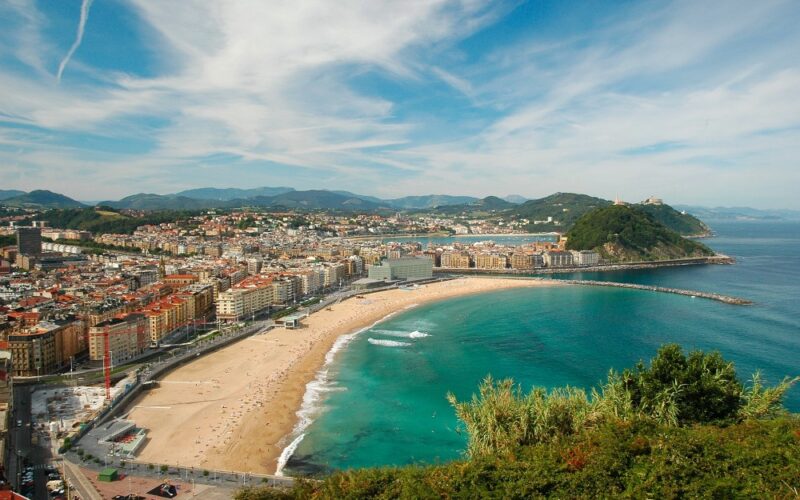
Source: San Sebastián Travel
Experienced surfers performing manoeuvres on the side near Sagües (swimmers are prohibited from entering), and school pupils and novice surfers in the area closest to the Kursaal cube.
But apart from what happens in the water, surfing is also in the air along the entire La Zurriola promenade. Wet hair, athletes standing with their eyes fixed on the ocean, analysing the currents and waves before entering; surfers fresh out of the water resting on the walls surrounding the beach, while they recharge their batteries with a sandwich and a can, watching those still in the water.
La Zurriola is only free of surfboards on two occasions, when the sea is calm or when it is rough. And even when winter storms hit, surfing in San Sebastian offers a plan B. On the one hand, there is La Concha beach. As it is a bay, with Santa Clara Island in the middle acting as a natural barrier against the force of the Atlantic, the swell from the storms reaches Pico del Loro, the area around the yacht club, and even the far end of Ondarreta. In all these places, slower right and left waves form, which the locals never miss.
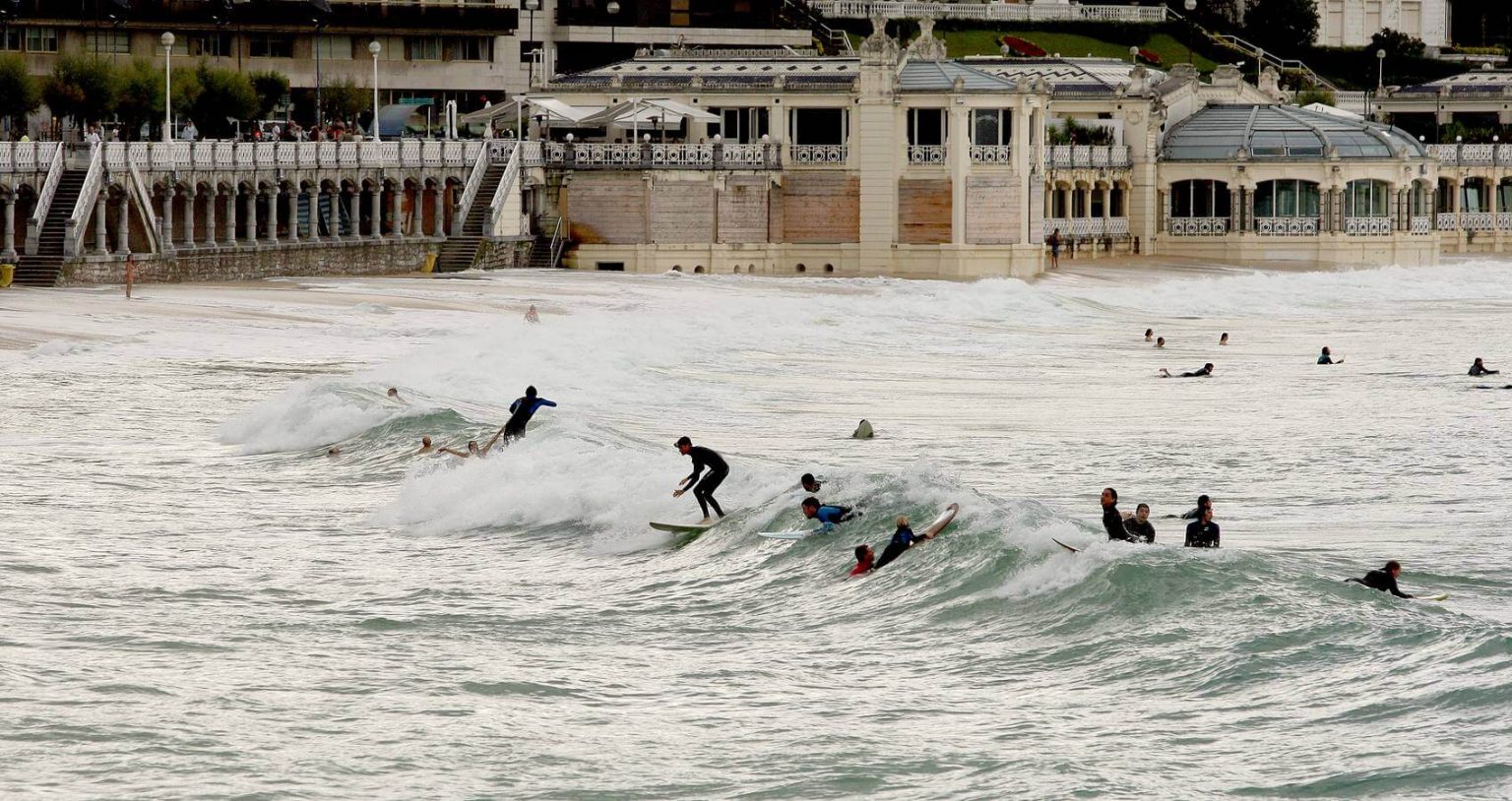
Source: Arizmendi
On the other hand, the mouth of the Urumea River is also an option when the waves are impossible on the beaches. Then, the force of the sea enters the estuary without permission, and in front of the Kursaal Bridge, surfers feed their passion.
Zarautz: the town where local surfing transcended to global fame
Zarautz is the prodigal daughter of Guipuzcoa surfing because it is the town that has elevated the greatest icons of national surfing: Aritz Aranburu, the only Spanish surfer to have competed in the CT (the highest level WSL circuit, where only the 36 highest-ranked surfers in the world can compete); and Pukas, one of the world’s leading surfboard manufacturers. It has also been the birthplace of Ibon Amatriaian and Axi Muniain, big wave surfers par excellence; and Aitor Francesena, four-time world champion in adapted surfing.
Zarautz beach is the longest stretch of sand in Guipuzcoa, at two and a half kilometres long, and the sea offers a variety of breaks. Left and right waves follow one another along this beach framed by mountains, and it is a place where most of the international surfing talent has been forged. Easy to access on foot from the beach, it is also an ideal place for beginners, given the proliferation of surf schools in the town.
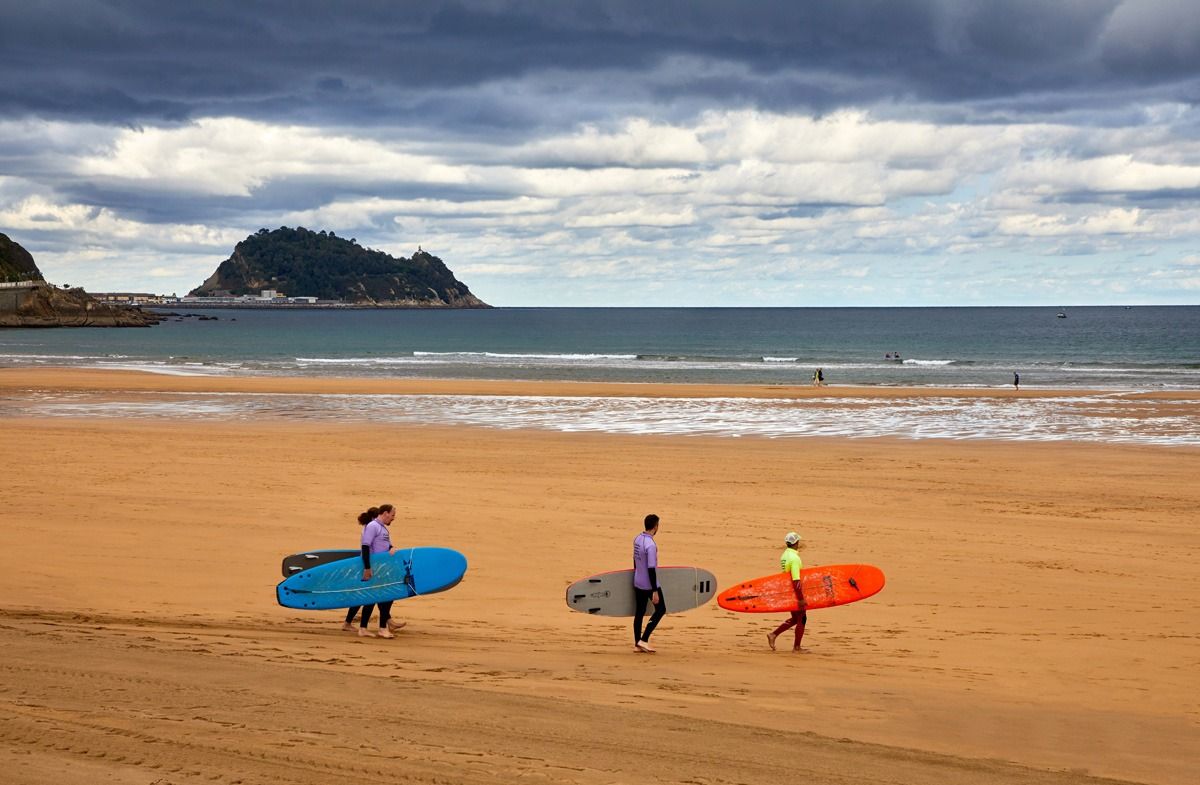
Source: Urain Suites
In Zarautz, as in San Sebastian, surfing is not just experienced in the water, but throughout the entire town. And especially on the promenade, where you can gaze out over the beach and where wave lovers inevitably gather, whatever the time of day. That’s why, even on days when the conditions aren’t ideal for swimming, the atmosphere is enough to satisfy your craving for surfing.
Orio, Getaria, Zumaia, Deba or Fuenterrabia: sandy beaches for everyone
Orio, Getaria, Zumaia and Deba (west of San Sebastian) are beach towns where the waves break over sandy bottoms, offering diverse surfing conditions that are easy to access. In Orio, on Antilla Beach, next to the mouth of the Oria River, a powerful left-hand break forms next to the breakwater on days when the waves are strongest, and there is also a quieter right-hand break in the middle of the beach.
In Getaria, on Gaztetape beach, west of the legendary Ratón de Getaria, this small sandy beach offers right and left breaks, depending on the strength of the Atlantic. In Zumaia, Itzurun beach, at the foot of the vertical cliffs of the spectacular flysch, offers changing right and left breaks that are perfect for beginners. At high tide, only suitable for experienced surfers, a fast shore break forms.
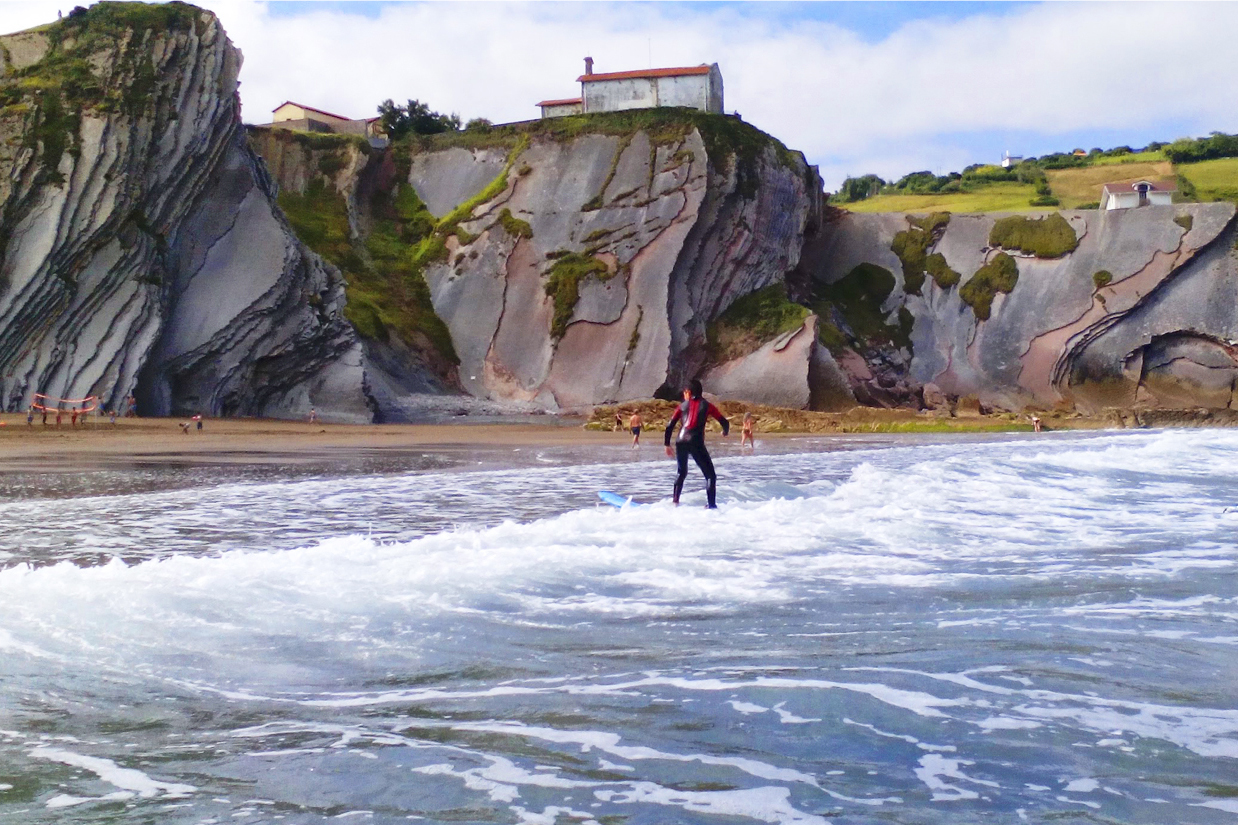
Source: Escuela de Surf Zumaia
On the western border of Guipuzcoa with Vizcaya, Deba attracts crowds of surfers. Santiago beach, as well as Lapari beach, offer long, consistent waves of sublime quality on good days. Finally, on the eastern side of Guipuzcoa, in Fuenterrabia, next to the mouth of the River Bidasoa (the natural border with France), a long right-hand wave forms next to the breakwater on strong days (especially in winter).
Peaks for experts in Guipuzcoa: Orrua and Roka Puta
While surfing in Guipuzcoa is characterised by beach waves that are changeable and calm, welcoming beginners, there are also aggressive peaks that are only suitable for highly experienced surfers. These are powerful, extreme waves breaking over rocky bottoms, the stuff of XXL surfing, which only form under very specific conditions and are tackled by only a select few.
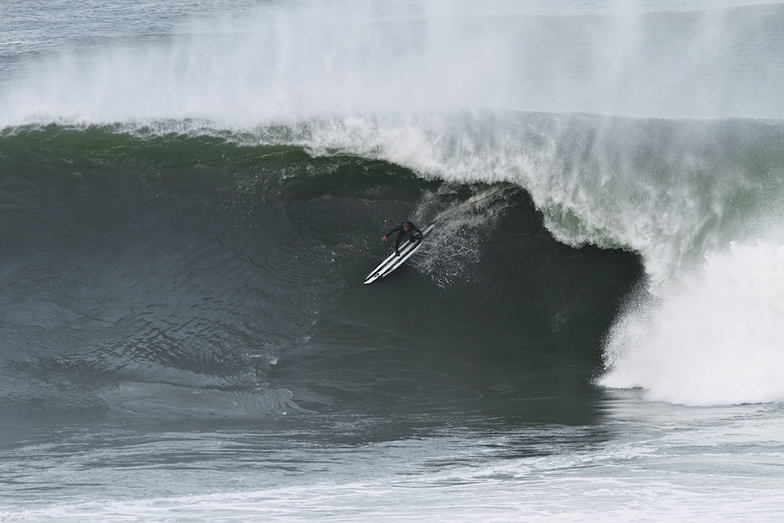
The most famous is Roka Puta, one of the biggest and most dangerous waves in Europe. Halfway between Getaria and Zumaia, this right-hand wave can reach heights of up to six metres. It has been the breeding ground for Basque XXL surfing and has produced legends such as the Muniain brothers, Axi and Igor Muniain, Ibon Amatriain, Imanol Yeregi, and Natxo Gonzalez. It rarely forms between autumn and spring, usually when the sea is at its strongest in the Cantabrian Sea and the right-hand wave at Orrua has passed. So, although the adrenaline rush of riding such walls is only suitable for a select few, the spectacle of watching it is appealing to everyone.
Not as crazy as Roka Puta, but also very big is Orrua: a clean, powerful right-hander on a rocky background, located between Zumaia and Getaria.
Source: Surf forecast
Surf schools in Guipuzcoa
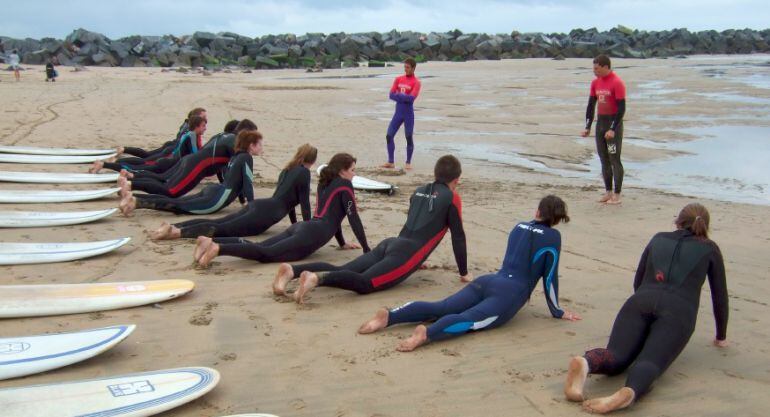
Surf schools are popping up all along the coast of Guipuzcoa. San Sebastian, Zarautz, Zumaia and Deba are home to most of these schools, which attract not only the province’s young talent, but also tourists who visit these towns in search of salt air. There are classes for children and adults, for beginners and for those looking to perfect their skills.
In Donostia, the Gros neighbourhood, and especially Avenida de la Zurriola, is home to most of the surfing schools, where local instructors accompany each surfer according to their needs. From Pukas to Hawaii, via Essus Surf Eskola Zarautz and Axi Muniain Surf Centre, there is a huge range of options along the coast, just a short walk from the beaches with waves, or a click away on your phone.
Surf lessons: the perfect option for continuing to learn with guidance
While it is true that surf schools are the most popular option for beginners in this sport, they can also be a unique socialising opportunity for those who want to share their passion for the sea with other athletes. Group lessons are the most common option at these schools, and the supervision of an instructor guarantees a certain level of safety for those who already know how to surf but are unfamiliar with the characteristics of certain spots.
Source: Cadena SER
If you’d like to explore some of these beaches and boardwalks during your visit to San Sebastián and enjoy the view of the waves in the distance, book our free walking tour of San Sebastian, you’ll discover the city’s most interesting spots or you can also book your own private tour with us.

A journalist with over 20 years of experience in the media, specializing in creative storytelling and informative content. Through Go Local, she connects with the people, places, and events that matter in San Sebastián, reporting with journalistic rigor on the milestones that shape the city’s identity.