
Donosti Regattas
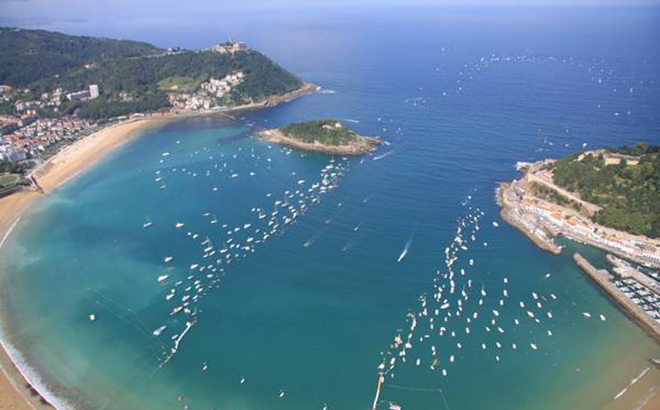
It’s early September, and in San Sebastian that means only one thing: regattas! Everyone knows that the first two Sundays in September are when the La Concha Regattas take place, better known as the Rowing Olympics, one of the main sporting events of the year in the Basque Country and the most important for our rowing.
Winning the La Concha Flag is the greatest honour for a rowing team and the competition is always fierce, as well as being a huge celebration for Donosti and all the fans who come to the city. Two days to head to the beach and enjoy one of our traditional sports in the best atmosphere. In our opinion, it’s a must!
Origin of regattas
The first La Concha regatta was held in 1879 and has taken place almost every year since then. It began as just another event in the summer programme, but given its success, it was decided to schedule it every year, and over time it acquired its own importance and became one of the main events of the year in its own right.
And all this comes from whaling. Centuries ago, when whales passed close to the coast, fishing boats manned by several rowers, a skipper and a harpooner would leave the ports at full speed to hunt the animals, as absolutely everything from the whale was used and hunting them meant earning large sums of money. So you had to be very quick to be the first to throw the harpoon. And as the coastal villages here are very close to each other, it was common to have to compete with the neighbouring village.
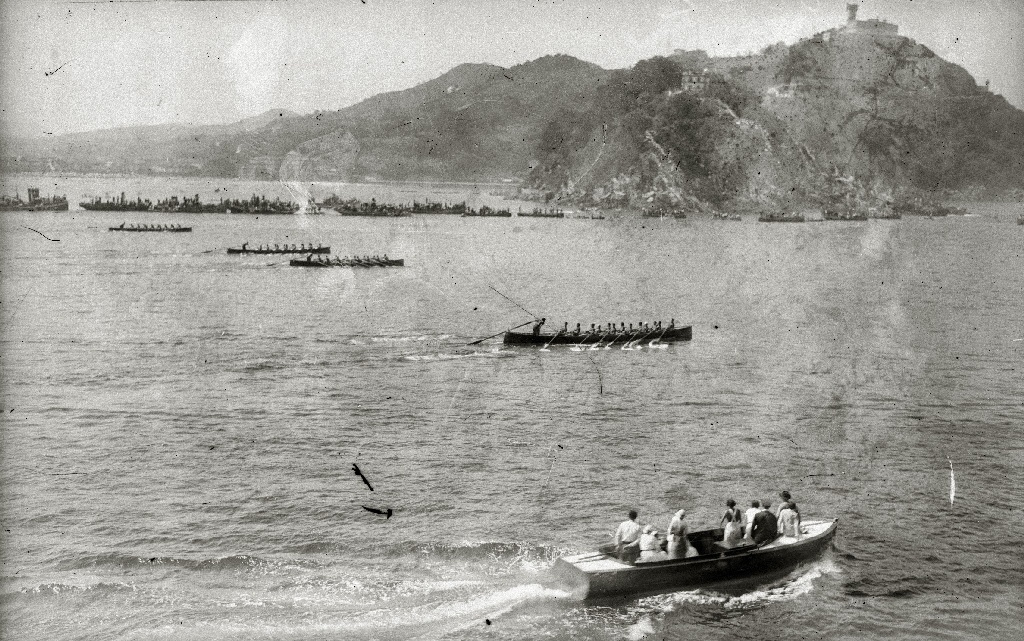
With the disappearance of whales from our coasts, skill and speed remained, now measured in challenges and competitions between villages. Thus, after several challenges between villages in Gipuzkoa, it was decided to organise a regatta to see who was the best. And so it has been ever since. It is therefore not surprising that most teams in this sport come from villages with a deep-rooted seafaring tradition.
The regattas of La Concha
The La Concha regattas are held on the first two Sundays in September, with the qualifying rounds taking place on the Wednesday and Thursday before the first Sunday. Of all the teams competing in the qualifying rounds, only seven go through, as the Donosti rowing boat participates regardless of its result, meaning that there are eight rowing boats competing on Sundays. On Sundays, there are two rounds of four teams each. The times of the eight teams are measured, the times from both days are added together, and the fastest team wins.
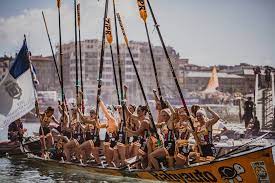
Obviously, both men and women compete, with the women’s race starting at 11 a.m. and the men’s at 12 noon. Another difference is the distance: the women race one and a half nautical miles and the men three miles.
The entire competition attracts around 100,000 people to San Sebastián, both from the participating towns and from all the surrounding areas, making it a day of festivities and celebration. We particularly enjoy seeing the city flooded with the colours of the rowing boats. Pink, blue, yellow, green, red, purple… a chaotic rainbow that brightens up Donosti and creates a unique atmosphere.
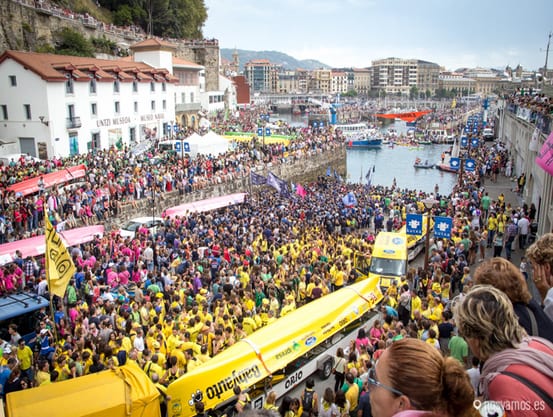
If you’re looking for sport, partying, tradition and good cheer, this is undoubtedly the perfect excuse to visit Donostia and enjoy one of the best days of the year. Of course, if large crowds aren’t your thing, it’s best to avoid the Old Town and the harbour. We recommend visiting Gros, the Centre or the Antiguo, where the influence of the festival is minimal and tranquillity reigns supreme.

With nearly 10 years of experience as a local guide in San Sebastián, Hegoi has dedicated his career to showcasing the city from an authentic, local perspective through Free Walking Tour San Sebastián and Go Local San Sebastián. As a native of San Sebastián, he combines historical knowledge, local culture, and recommendations based on personal experience to create useful and reliable content on what to see, what to do, and how to experience San Sebastián like a local.